The anchoring of a crown, bridge, or denture with dental implants securely attaches replacement teeth to the jaw using metal implants as artificial roots. This article explains the common anchoring methods, the benefits, typical timeline, and what patients can expect when choosing dental crowns & bridges in Berkeley, CA. Read on for clear, practical steps you can take next.
Understanding the anchoring of a crown, bridge, or denture
Anchoring means using dental implants to hold crowns, bridges, or dentures in place instead of relying on nearby teeth or suction. With implants, the restoration is attached to a titanium post that is placed in the jaw. This differs from a conventional bridge (which uses adjacent teeth for support) and a removable denture (which sits on the gums and can move).
Using implants for dental crowns & bridges gives stronger chewing, better comfort, and longer-lasting support than traditional options.
How dental implants work to anchor restorations
Implant parts and osseointegration
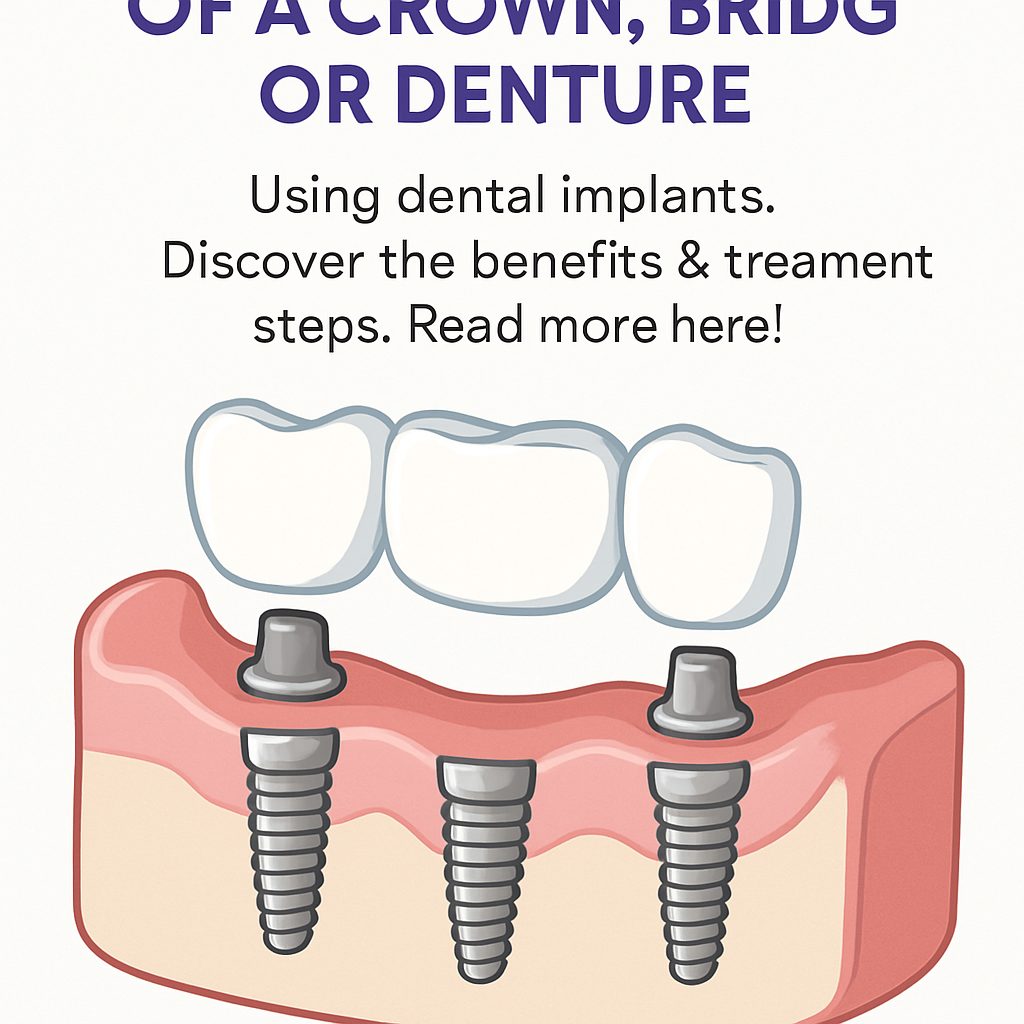
An implant system has three main parts: the implant fixture (the titanium post in the bone), the abutment (the connector), and the prosthesis (the crown, bridge, or denture). After placement, the bone gradually bonds to the implant in a process called osseointegration. That bond is what makes implants stable and able to bear normal chewing forces.
Fixed vs. removable anchoring
Implant-supported (fixed) restorations are screwed or cemented onto implants and stay in the mouth like natural teeth. Implant-retained (removable) restorations snap on and off an attachment and are taken out daily for cleaning. Fixed options feel more like natural teeth; removable options are easier to clean and can be chosen when fewer implants are used or for cost reasons.
Types of implant anchoring explained
Single-tooth implant (crown)
A single implant replaces one missing tooth. After healing, a custom crown is attached to the abutment. This preserves nearby teeth because the implant does not rely on them for support. For straightforward dental crowns & bridges placement basics, the crown is matched in shape and color to your natural teeth.
Implant-supported bridge
When several teeth in a row are missing, an implant-supported bridge can span the gap and be supported by two or more implants. Compared with a long conventional bridge that uses natural teeth as anchors, an implant-supported bridge preserves adjacent teeth and offers better long-term stability.
Implant-retained and implant-supported dentures
Snap-on or overdentures attach to a small number of implants and are removable for cleaning. Full-arch fixed solutions, like All-on-4® style treatments, use multiple implants to support a permanent arch that does not come out. Snap-on dentures offer easier maintenance; fixed full-arch restorations offer the most stable, natural feel.
Benefits of anchoring restorations with implants
- Stability and improved chewing efficiency compared with conventional dentures
- Bone preservation and better facial support to prevent sunken appearance
- Improved speech, comfort, and confidence
For patients looking for dental crowns & bridges in Berkeley, CA, implant anchoring reduces the need to alter healthy teeth, supports long-term oral health, and often improves daily function and comfort.
Who is a good candidate and typical treatment steps
Good candidates generally have adequate bone volume, good overall health, controlled medical conditions (like diabetes), and non-smoking or willingness to quit. Good oral hygiene is important for success.
Typical treatment steps:
- Consultation and 3D imaging to plan treatment
- Bone grafting if needed to build adequate support
- Implant placement in the jaw
- Healing period for osseointegration (often several months)
- Abutment placement and impression for the prosthesis
- Attachment of the final crown, bridge, or denture and final adjustments
Care, longevity, and potential risks
Daily care includes brushing twice a day, flossing or using interdental brushes around implants, and keeping denture attachments clean if you have a removable option. Regular dental checkups and professional cleanings help catch issues early.
Implants can last many years—often 10–25+ years—when well cared for. Watch for signs of problems like swelling, pain, or movement of the restoration. Risks such as infection, implant failure, or bone loss are uncommon and are minimized by good planning, surgical technique, and maintenance.
Costs, timeline, and financing basics
Costs depend on the number of implants, whether grafting is needed, the type of prosthesis (single crown, bridge, removable denture, or fixed full-arch), and lab fees. Treatment commonly spans several months from consult to final restoration, though some same-day or immediate-load options can shorten that timeline.
Many practices offer payment plans, third-party dental financing, or phased treatment to spread costs. Pricing varies for dental crowns & bridges in Berkeley, CA, so get a personalized estimate during your consultation.
Why choose Bay Smiles for implant anchoring
Bay Smiles provides comprehensive implant care with modern digital planning and guided techniques. Dr. Ricky Singh, DMD (University of Pennsylvania), leads the practice and brings 20+ years of experience in cosmetic and implant dentistry. The office offers All‑on‑4® options, guided implant placement, and same-day solutions when appropriate.
To learn if implant-anchored dental crowns & bridges in Berkeley, CA are right for you, schedule a consultation. Expect a review of your medical history, 3D imaging, and a clear treatment plan with timeline and cost estimate. Contact Bay Smiles to get started with a personalized plan and quote.