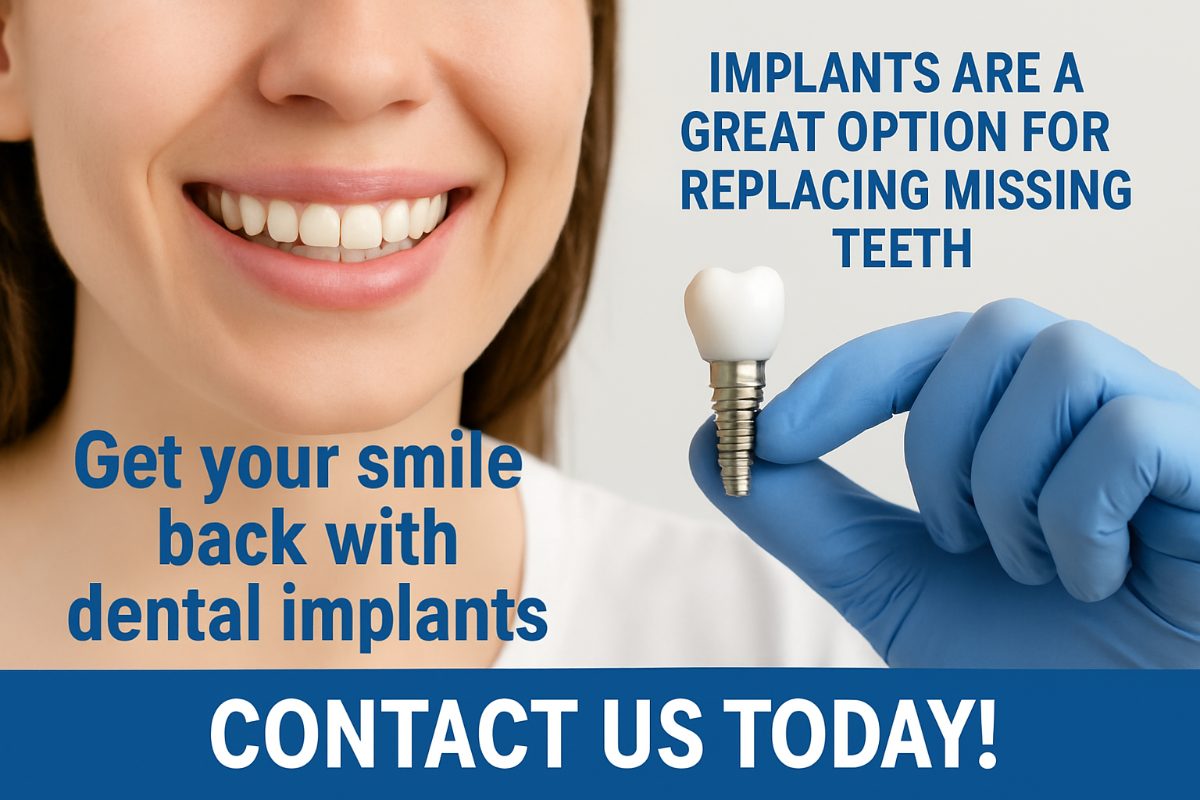
Implants dentals are artificial tooth roots placed into the jaw to hold replacement teeth or bridges. They help people with one or more missing teeth, loose dentures, or teeth that are failing. This short guide explains how implants dentals work, what affects cost, typical price scenarios, and practical next steps to get a consult and a personalized estimate.
How Implants Dentals Work
Implants dentals have three main parts: the implant (a titanium or ceramic screw that acts like a root), the abutment (a connector), and the crown or prosthesis (the visible tooth or bridge). Together they restore function and appearance.
- Consult and imaging: Exam, X-rays or CBCT scan, and treatment planning.
- Extraction or grafting if needed: Remove damaged teeth and add bone grafts or sinus lifts when bone is low.
- Implant placement: Surgeon places the implant into bone.
- Healing (osseointegration): Bone fuses to the implant over weeks to months.
- Final restoration: Abutment and crown, bridge, or full-arch prosthesis are attached.
Success rates for implants dentals are high when placed by experienced teams. Aftercare includes good brushing, avoiding hard habits, and regular dental checkups to keep implants healthy.
What Affects the Cost of Implants Dentals
Number and type of teeth being replaced
Replacing a single tooth costs much less than an implant-supported bridge or a full-arch solution. Full-arch options (like all-on-4) reduce the number of implants but are more complex overall.
Bone health and additional procedures
If you need extractions, bone grafts, or sinus lifts, the total price goes up. Poor bone or gum health can add multiple procedures and appointments.
Materials and technology
Higher-quality implants, zirconia or custom crowns, and advanced imaging (CBCT, 3D planning, guided surgery) increase costs but often improve accuracy and outcomes.
Provider experience and lab fees
Specialists and dental centers with advanced labs typically charge more. Lab-made prosthetics and custom workflows add to the final bill but can give better fit and longevity.
Typical Price Ranges & What To Expect
Costs for implants dentals vary widely by region, provider, and treatment complexity. Low-cost scenarios might involve a single implant with a basic crown and no grafting. Mid-range cases often include imaging, a good-quality crown, and occasional grafts. High-end scenarios involve multiple implants, full-arch restorations, advanced materials, and guided surgery. Because every mouth is different, ask for an itemized estimate that separates implant placement, parts, imaging, grafts, and the final crown or prosthesis.
How To Afford Implants Dentals & Next Steps
Options to manage cost include checking dental insurance limits, in-office financing, third-party medical credit, and flexible payment plans. When you book a consult, bring a list of questions:
- How many implants do I need and why?
- What is your experience with implants dentals and complication rates?
- Will I need bone grafts or extractions?
- Can you provide a written, itemized estimate and timeline?
- Do you offer warranties or follow-up care for implant work?
If you’re ready to learn your options, schedule a consult to get a tailored treatment plan and price estimate. Contact the office to start with an exam and imaging—this is the fastest way to get a clear, personalized cost for implants dentals and the care you need.