If you’re researching the implant success rate, this article will help you understand what that term means, the most common problems that can happen, and clear steps to take if you think an implant is failing. Read on for practical signs to watch for, immediate actions, what your dentist will do, and ways to improve your chances before and after surgery.
What “implant success rate” means
Implant success rate refers to how often dental implants remain functional, stable, and comfortable over time. Modern dental implants commonly report success rates from about 90% to 98% over 5–10 years, depending on patient health, surgical skill, and aftercare. Success is measured by survival (implant still in place), proper function (chewing and speaking), absence of pain or infection, and healthy surrounding bone and gum tissue.
Common causes of implant problems
Implant problems usually come from a few main sources: infection, poor bone or placement, and patient health or habits. Identifying the cause guides the correct treatment.
Infection (peri-implantitis)
Bacteria build up around the implant can cause inflammation of the gums and bone loss. Poor oral hygiene, irregular cleaning, or untreated gum disease raise the risk. Early infection may be reversible; advanced peri-implantitis can lead to implant failure.
Poor bone or surgical placement
Low bone volume, incorrect angulation, or mechanical overload (wrong bite) can prevent the implant from integrating with bone. In some cases, grafting or guided placement is needed to ensure stability.
Health and lifestyle factors
Smoking, uncontrolled diabetes, osteoporosis, certain medications, and heavy teeth grinding (bruxism) all raise the chance an implant will fail. Managing these factors before surgery improves outcomes.
Early vs. late implant failure
Timing helps determine the likely cause and treatment path.
Early failure
Happens within weeks to a few months after surgery. Signs include persistent pain, swelling, or failure of the implant to integrate with the bone (lack of osseointegration). Early infection or surgical issues are common causes.
Late failure
Occurs months to years later. You may see gradual bone loss, gum recession, loose implant parts, infection, or a change in bite. Late failure is often linked to peri-implantitis, overloading, or underlying health changes.
Signs and symptoms to watch for
Call your dentist if you notice any of the following around an implant:
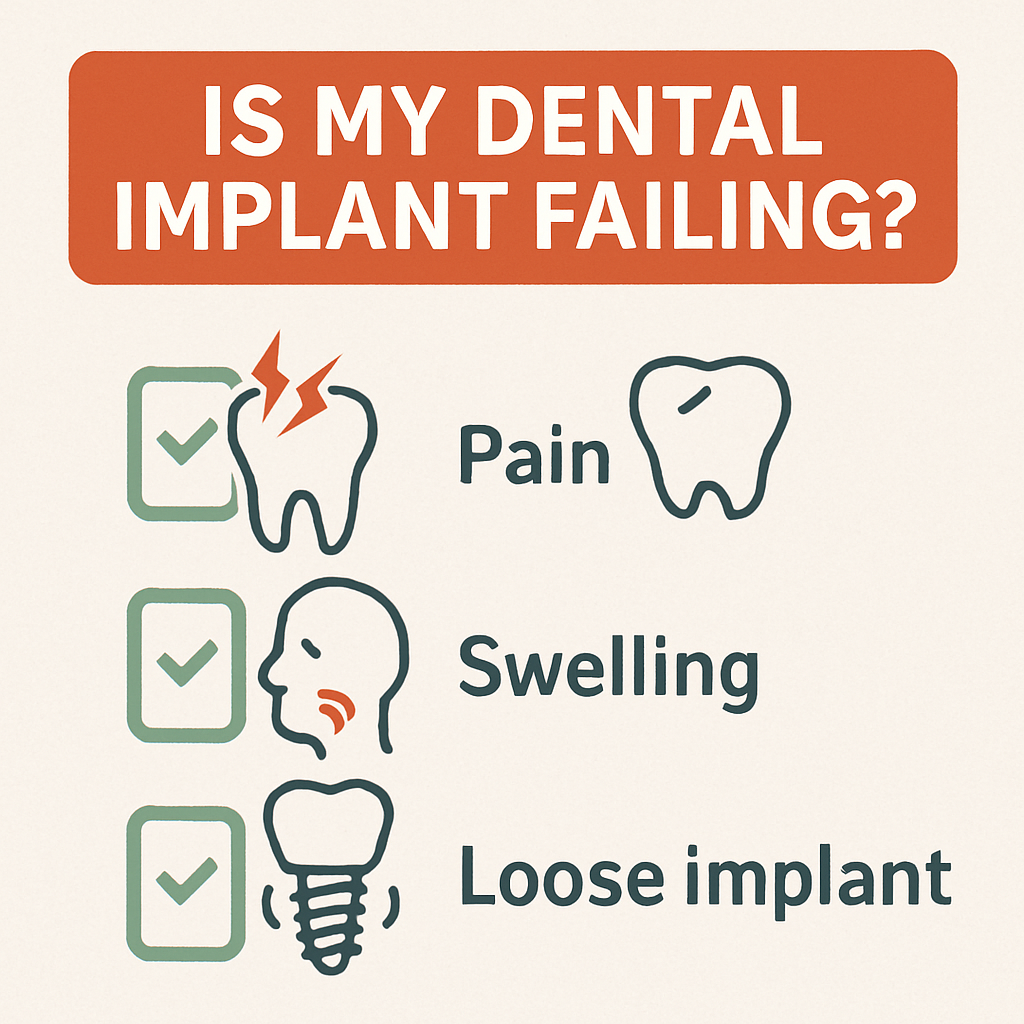
- Pain that won’t ease with time or medication
- Swelling, redness, or pus near the implant
- A wobbling or mobile implant
- Gum recession or exposed implant threads
- Change in bite or persistent discomfort when chewing
Immediate steps if you suspect a failing implant
If you think an implant is failing, act quickly to limit damage. Stop chewing on that side, maintain gentle but thorough cleaning, and rinse with warm salt water. Take photos and note when symptoms started. Then call your dentist for an urgent exam.
What your dentist will likely do
The dentist will perform a clinical exam and take X‑rays or a CBCT scan to check bone and implant position. They may probe the area to measure pocket depth and look for infection. Short-term antibiotics or antiseptic rinses may be prescribed if infection is present. From there a treatment plan is made—ranging from cleaning and monitoring to surgical repair.
How to improve your implant success rate before and after surgery
Results improve when you prepare and follow care rules afterward.
Pre-op measures
Get medical clearance if you have chronic conditions. Control blood sugar, stop smoking, and discuss bone grafts or sinus lifts with your dentist if bone is insufficient. Plan for guided surgical techniques if anatomy is challenging.
Post-op care
Follow your dentist’s cleaning plan, attend scheduled follow-ups, and treat any signs of gum disease early. If you grind your teeth, wear a night guard. Maintain good oral hygiene and see your provider promptly for any unusual symptoms.
When to see a specialist and what to expect from treatment
Your general dentist may refer you to a periodontist or oral surgeon for advanced problems. Specialists can perform deep cleaning around the implant (debridement), surgical pocket reduction, bone grafting, or, if needed, remove and replace the implant. Expect a thorough evaluation, imaging, and a discussion of options based on how much bone and soft tissue remain.
Quick checklist and next steps
Use this short checklist if you suspect a problem with an implant:
- Observe and document symptoms (photos help)
- Avoid chewing on the affected side
- Rinse gently with warm saline or antiseptic mouthwash
- Call for an urgent dental exam
- Ask whether imaging (X-ray or CBCT) is needed
If symptoms persist, consider a second opinion or a specialist evaluation. Bay Smiles offers implant evaluations and second opinions for patients concerned about their implant success rate in Berkeley, CA. Dr. Ricky Singh and the team use digital diagnostics and guided techniques to review problems and recommend a clear treatment plan. Call to schedule an exam if you have pain, mobility, or signs of infection around an implant.